Public Participation in Disaster Triage
Five Days at MemorialPublic Participation in Disaster Triage treats the allocation of scarce care as both a medical problem and a public question: when not everyone can receive the treatment or rescue they need, the principles for choosing among them should be open to the people who will live with those choices. The issue becomes especially urgent in a disaster, when decisions about evacuation, treatment, and life-sustaining resources can determine who gets a chance to survive. The account argues that professional expertise is necessary, but insufficient to decide what a community considers fair.
The stakes of triage
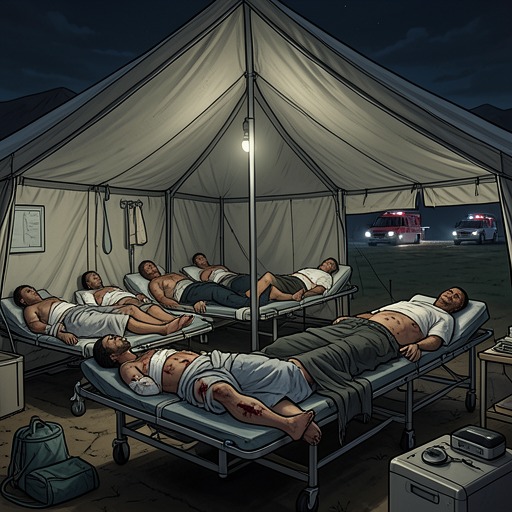
Disaster triage does not begin with an abstract ranking system. It arises amid concrete shortages and institutional constraints. As Hurricane Katrina approached New Orleans, residents without cars depended on public transport to reach the New Orleans Superdome, designated as a shelter of last resort. Officials knew that the city’s transportation plans had major gaps. Acadian dispatchers were overwhelmed by requests to move patients from hospitals, nursing homes, and homes; many available ambulances were stuck in traffic, and some began taking patients to the Superdome instead of out of the city. These conditions made the question of priority unavoidable while also showing that people’s chances of reaching help were shaped by access to transportation and the organization of rescue, not simply by clinical need.
At Memorial Medical Center, doctors placed patients with Do Not Resuscitate orders last in the evacuation order. Four patients with DNR orders were in the intensive care unit, including Helen Breckenridge and Jannie Burgess. Yet a DNR order meant that a patient whose heartbeat or breathing had stopped should not be revived; it did not, by itself, establish that the patient was terminal or less likely to survive an evacuation. The later recommendations of the Institute of Medicine emphasized that such orders express advance preferences and planning more than they provide an accurate estimate of survival. This contrast illustrates why a category that appears administratively convenient may not be an ethically sound proxy for need or prognosis.
The wider disaster response compounded those bedside choices. More than a thousand people died immediately in New Orleans, many in medical facilities and many others among poor and elderly residents; additional suffering and deaths followed disruptions to health care. Delayed evacuation, inadequate buses and drivers, uncoordinated rescue efforts, communication failures, and hospitals’ weak backup systems all contributed. Triage rules cannot repair those failures. Public deliberation can, however, make visible the unequal conditions in which rules operate and help determine what obligations remain when resources are insufficient.
Why professional judgment is not enough
A triage framework embodies choices about what counts as a good outcome. It may aim to save the greatest number of lives, preserve the most years of life, prioritize those most likely to survive an immediate illness, or account for underlying health and prospects for long-term survival. It may consider age, the potential contribution of health professionals and support staff during the emergency, first-come-first-served treatment, or a lottery that gives people an equal chance. None of these approaches is simply a clinical calculation: each expresses a view about fairness, social value, and the purpose of distributing limited resources.
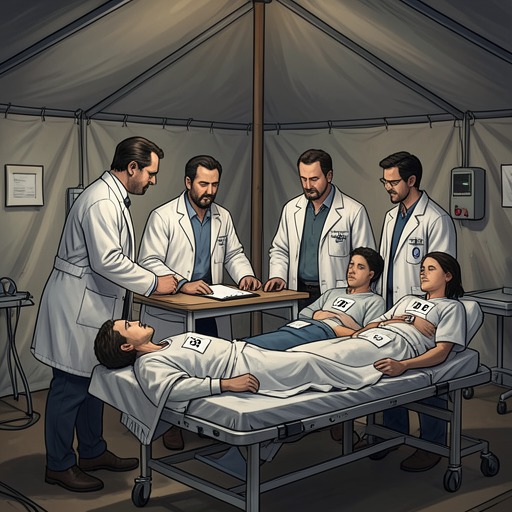
The account distinguishes making medical judgments from deciding which public values should govern those judgments. Professionals may be skilled at assessing a patient’s condition and the likely effects of treatment, yet they should not be left alone to settle whose life or future merits priority. The issue is especially sensitive when emergency plans contemplate withdrawing life-sustaining care from one patient so that another can receive a scarce resource. Such decisions can also shape public confidence in medicine. In Seattle and King County, participants objected that withdrawing life-sustaining care could erode trust; they also warned that survival statistics might reproduce institutional discrimination if some groups, including African Americans and immigrants, had historically received lower-quality care.
Maryland’s deliberative approach
Maryland offered an alternative to developing triage rules solely among specialists. In June 2013, Elizabeth Lee Daugherty described a pandemic scenario to a group of volunteers: the health system was overwhelmed, all available help was needed, and patients exceeded capacity. The dilemma echoed the choices faced at Memorial as floodwaters rose: whether to prioritize those dependent on machines, those most likely to survive an immediate illness, people with better prospects for long-term survival, or people whose work might help others through the crisis. The discussion also considered first-come-first-served allocation and a lottery.
Rather than presenting a completed framework for public approval, Maryland health professionals sought input from a broad sample of residents in small-group sessions held across the state over two years. Daugherty turned the discussion to the volunteers and asked them to identify their values. Meetings took place in settings as different as the basement of Zion Baptist Church in Baltimore and a wellness center in affluent Howard County. The process was designed to hear from people before the decision framework had been settled, rather than treating public response as an afterthought.
The experiment challenged the assumption that ordinary citizens could not grasp the ethical questions involved. Participants engaged with complex allocation principles and learned from one another. In one discussion about using age as the main basis for allocating disaster resources, a young man objected to the possibility that he might receive a ventilator while a twelve-year-old or four-year-old did not. His response made a general policy choice concrete: a rule that might appear defensible in aggregate could be experienced as intolerable when considered from the position of a particular person or family. The deliberative process did not remove disagreement; it gave disagreement a place in the formation of policy.
Public input, transparency, and timing
New York’s ventilator-allocation planning documents recognized public review as important to transparency and just guidelines. They proposed focus groups that would include parents, older adults, people with disabilities, and communities of color. Those groups were never convened, and the plans were not changed. The gap between naming participation as an ethical component and actually inviting participation shows how easily public engagement can remain a promise on paper.
Experience in Seattle and King County reinforced the need to hear from people beyond the medical profession. Participants questioned plans that permitted withdrawal of life-sustaining treatment and raised concern that using survival measures could be discriminatory in a health system where access and quality of care were unequal. Their objections were not merely reactions to technical detail: they concerned whether the system could claim legitimacy while using measures shaped by its own history of unequal treatment.
Timing also determines whether consultation can matter. In 2009, the Centers for Disease Control and Prevention collected public feedback on a proposed emergency vaccination program for a new flu strain. Public opinion diverged substantially from expert opinion, but the policy had essentially been made by the time the feedback was gathered. Asking people after the operative choice is settled may record their views without giving those views any influence. Participation therefore requires an opportunity to shape the framework in advance, as well as a credible account of how public input affects the final decision.
Accountability and the limits of protocol
The Institute of Medicine’s 2012 report supported involving the public in developing disaster resource-allocation guidelines. It held together several obligations: crisis conditions may justify limiting access to scarce treatments, but providers still have duties to care for patients, treat them fairly, and steward resources. When shortages require restrictions, decisions should be transparent, consistent, proportional to the shortage, and accountable. These standards make public involvement more than a consultation exercise: they offer criteria by which both the rules and their application can be judged.
Public participation does not guarantee consensus, nor does it automatically resolve how majority and minority views should be weighed or whether policymakers will share authority. It does expose the values and trade-offs that a technical protocol can conceal. Carl Schultz, a critic of lowering standards of care in disasters, warned that reduced standards could appeal to governments and companies because they lessen pressure to provide better care, and that emergency rules might later migrate into ordinary settings where costs are a concern. The argument for participation is thus also an argument for scrutiny: communities should be able to examine not only who receives scarce resources, but why scarcity exists, how decisions are made, and whether emergency exceptions risk becoming routine.